



Does a silicone magnetic watch strap affect the natural curvature of the watch against the wrist?
Release Time : 2025-12-03
In today's world where smart wearable devices are increasingly integrated into daily life, watch straps are no longer just accessories for securing watches; they are key elements affecting wearing comfort and overall aesthetics. Silicone magnetic watch straps, with their soft, skin-friendly material and convenient buckle-less design, have won the favor of many users. However, a detail often overlooked yet crucial is: does the increased overall thickness of the magnetic module after engagement affect the natural curvature of the watch against the wrist? This seemingly minor issue directly relates to the comfort of prolonged wear, stability during exercise, and even the smoothness of the appearance.
The human wrist is not flat but a three-dimensional structure with a gentle curvature. Ideally, the back of the watch case should fit naturally against the wrist bone, with the strap smoothly transitioning along the wrist's contour, neither compressing blood vessels nor creating gaps or movement. Traditional pin buckles or butterfly clasps adjust tightness through adjustable holes, but their connection points are usually thin, causing minimal interference with the overall curvature. Silicone magnetic watch straps rely on built-in magnet modules for closure. These magnets, though small, have a certain volume, and especially when using a multi-pole strong magnetic structure to ensure stability, the clasp area often forms a slightly thicker "joint."
If poorly designed, this thickened area can become a "hard spot" that disrupts the fit. When the strap is fastened around the wrist, if the magnetic part is significantly higher than the strap itself, it will create a localized bulge on the inside of the wrist, causing not only a foreign object sensation but also discomfort when the arm is bent or under pressure. More seriously, it forces the watch to be slightly "elevated," preventing the case from fully conforming to the skin, affecting the accuracy of biometric functions such as heart rate sensors, and weakening the sense of unity between the device and the body.
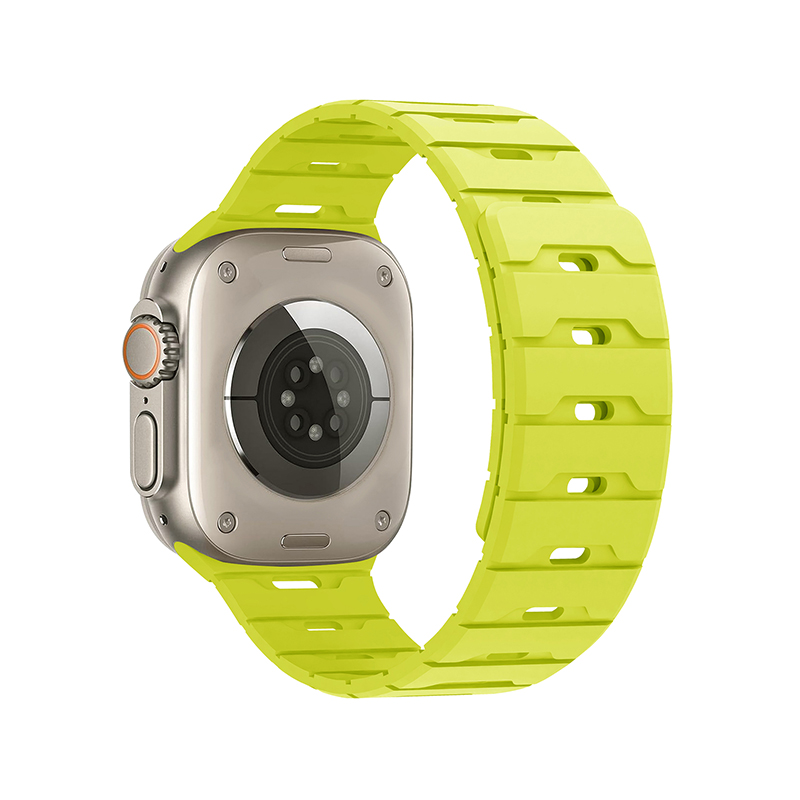
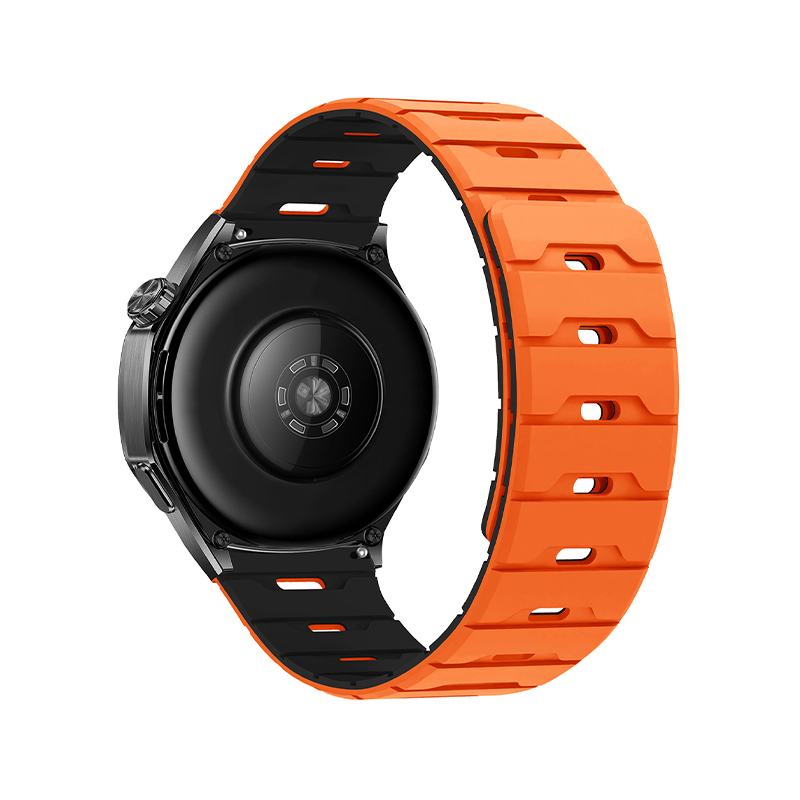
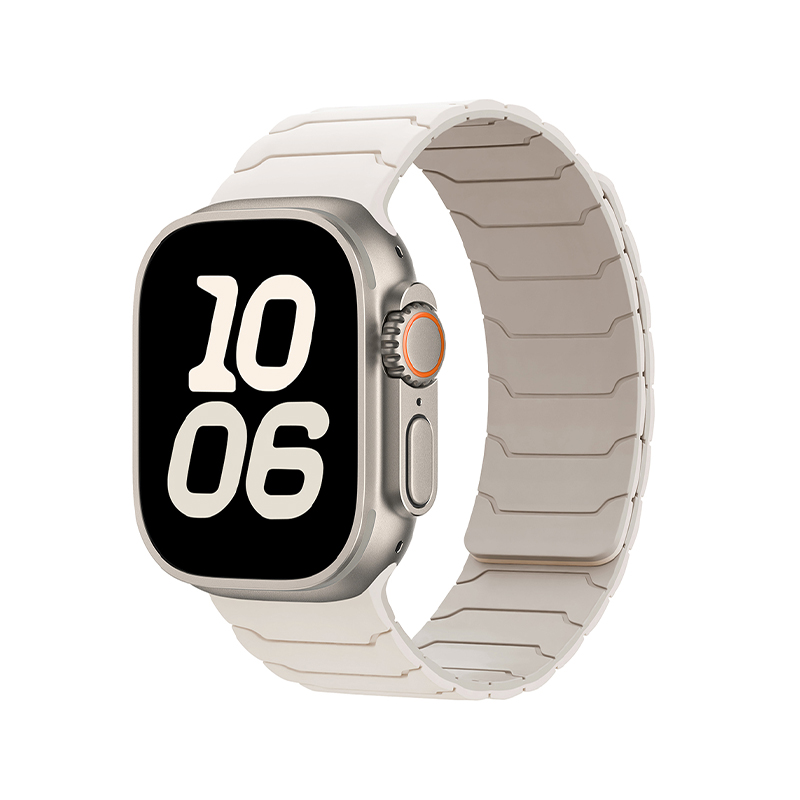
Fortunately, excellent silicone magnetic watch straps take this challenge into account from the initial design stage. Firstly, structurally, many brands use an "embedded" magnet layout—completely encasing the magnets within the silicone and using precision molding to ensure a smooth, stepless surface. Secondly, the magnetic module is often designed with a streamlined or concave shape, allowing it to conform to the wrist's curve after fastening, rather than protruding abruptly. Some high-end products even use flexible magnetic strips instead of block magnets, minimizing thickness while maintaining adhesion.
Furthermore, the high elasticity of silicone itself allows for optimized fit. High-quality liquid silicone is soft and resilient; even if slightly thicker in some areas, it can deform slightly under wearing pressure, gradually adapting to the unique contours of an individual's wrist. Combined with sweat-wicking channels or wave-like textures on the inside of the strap, this further enhances smoothness and airflow, alleviating the stuffiness caused by thickness.
Of course, the user's choice and wearing method also play a crucial role. Correctly adjusting the strap length—avoiding excessive pressure on the magnetic parts due to being too tight, or friction due to being too loose—significantly improves the experience. Additionally, different watch brands have varying lug spacing and case curvature; choosing a silicone magnetic watch strap optimized for a specific model often yields the best fit.
Ultimately, the thickness of the silicone magnetic watch strap isn't an insurmountable technical obstacle, but rather a reflection of design philosophy—is it about sacrificing some comfort for ultimate convenience, or finding a delicate balance between function and ergonomics? Truly excellent products choose the latter. When the magnets quietly close, the strap fits the wrist like a second skin; that moment of imperceptible wearing is the gentlest interpretation of "human-centered" industrial design. At the intersection of technology and the body, true mastery is revealed in the details.
The human wrist is not flat but a three-dimensional structure with a gentle curvature. Ideally, the back of the watch case should fit naturally against the wrist bone, with the strap smoothly transitioning along the wrist's contour, neither compressing blood vessels nor creating gaps or movement. Traditional pin buckles or butterfly clasps adjust tightness through adjustable holes, but their connection points are usually thin, causing minimal interference with the overall curvature. Silicone magnetic watch straps rely on built-in magnet modules for closure. These magnets, though small, have a certain volume, and especially when using a multi-pole strong magnetic structure to ensure stability, the clasp area often forms a slightly thicker "joint."
If poorly designed, this thickened area can become a "hard spot" that disrupts the fit. When the strap is fastened around the wrist, if the magnetic part is significantly higher than the strap itself, it will create a localized bulge on the inside of the wrist, causing not only a foreign object sensation but also discomfort when the arm is bent or under pressure. More seriously, it forces the watch to be slightly "elevated," preventing the case from fully conforming to the skin, affecting the accuracy of biometric functions such as heart rate sensors, and weakening the sense of unity between the device and the body.
Fortunately, excellent silicone magnetic watch straps take this challenge into account from the initial design stage. Firstly, structurally, many brands use an "embedded" magnet layout—completely encasing the magnets within the silicone and using precision molding to ensure a smooth, stepless surface. Secondly, the magnetic module is often designed with a streamlined or concave shape, allowing it to conform to the wrist's curve after fastening, rather than protruding abruptly. Some high-end products even use flexible magnetic strips instead of block magnets, minimizing thickness while maintaining adhesion.
Furthermore, the high elasticity of silicone itself allows for optimized fit. High-quality liquid silicone is soft and resilient; even if slightly thicker in some areas, it can deform slightly under wearing pressure, gradually adapting to the unique contours of an individual's wrist. Combined with sweat-wicking channels or wave-like textures on the inside of the strap, this further enhances smoothness and airflow, alleviating the stuffiness caused by thickness.
Of course, the user's choice and wearing method also play a crucial role. Correctly adjusting the strap length—avoiding excessive pressure on the magnetic parts due to being too tight, or friction due to being too loose—significantly improves the experience. Additionally, different watch brands have varying lug spacing and case curvature; choosing a silicone magnetic watch strap optimized for a specific model often yields the best fit.
Ultimately, the thickness of the silicone magnetic watch strap isn't an insurmountable technical obstacle, but rather a reflection of design philosophy—is it about sacrificing some comfort for ultimate convenience, or finding a delicate balance between function and ergonomics? Truly excellent products choose the latter. When the magnets quietly close, the strap fits the wrist like a second skin; that moment of imperceptible wearing is the gentlest interpretation of "human-centered" industrial design. At the intersection of technology and the body, true mastery is revealed in the details.